

“Now I’m in so much pain because I’ve got a totally screwed up back, degenerative osteoarthritis, degenerative being the operative word... God is punishing me for my past by keeping me alive with incredibly painful situations.”
That’s Ginger Baker, the drummer of Cream, describing his osteoarthritis. ~Half of American adults develop symptomatic knee osteoarthritis by the age of eighty-five, so the odds are that you will one day sit where Baker sat. When you do, your doctor might tell you to exercise and maybe lose some weight. Then, they might give you a gel to rub onto the painful joints, which could help somewhat. If it does not, then perhaps you will be given Aspirin or Tylenol, or steroids injected into the joint. And then, eventually, there is surgery to replace your knee.
All of this may make osteoarthritis a bit easier to live with, but often not enough. One attempt to improve this bleak situation was tanezumab, targeting nerve growth factor. At first glance, it seemed to work: It beat NSAIDs on pain and daily function. Then some patients developed rapidly worsening osteoarthritis, and the drug died.
Meanwhile, sprifermin (recombinant FGF18) took a different approach: stimulating cartilage growth. The drug produced about 0.05mm cartilage thickness versus placebo, but no improvement in how patients felt. Without an established threshold for meaningful MRI change in cartilage thickness, the structural benefit alone was not enough for approval.
We’ve had several partial successes, which are hard enough to come by. For complete success, it seems we have to combine multiple mechanisms in one drug. But how do we even start looking for that?
Lorecivivint, now submitted for NDA, attempts to do both, but its clinical effects have been inconsistent. It emerged from a discovery process built around Wnt modulation, with the pathway defining the candidate space from the outset. A search constrained to one pathway may find a promising drug, but offers little reason to believe it has found the best one. Better ones may simply have fallen outside the search space.
Our idea was to greatly widen the search space, apply the ideal drug profile as the search criterion, and then test candidates against each risk encountered in drug development. We applied that strategy by first putting hundreds of independently barcoded perturbations directly into diseased living tissue. After all our filtering, a candidate we code-named Omen 13 emerged and is now in IND-enabling studies. It was selected to suppress the inflammation associated with osteoarthritis pain, making movement more bearable, while also protecting cartilage from further destruction and supporting the production of cartilage matrix.
So, how did we do it?
Collecting omens
Drug development has been severely limited by the high cost of validating causation in high-fidelity models. This forces most programs to commit early to a small number of hypotheses (adding considerable risk of picking the wrong hypothesis), or to compromise by using less predictive model systems (which prevents proper derisking).
We avoid that trade-off by putting candidates (and combinations) into Mosaic Screening until we find the full therapeutic profile we’re looking for. But first, we had to choose the living system to run our screens in.
Most osteoarthritis (OA) research is done in young mice whose cartilage is surgically injured and degenerates within a few weeks. This system is fast, reproducible and experimentally convenient. But it models injured cartilage, not naturally occurring OA, which typically develops through years of loading and use. Unless the patient is an NFL player, OA rarely begins with one identifiable blow. Young mice also cannot capture the age-related changes that make us vulnerable to the disease. It would clearly be better if we could run our tests in disease similar to what patients experience.
So what would a more realistic model look like? Probably a large mammal with joints similar in size to ours, that lives long enough to develop OA naturally and progressively. It turns out that people who own horses, for racing or farming, see this happening all the time.
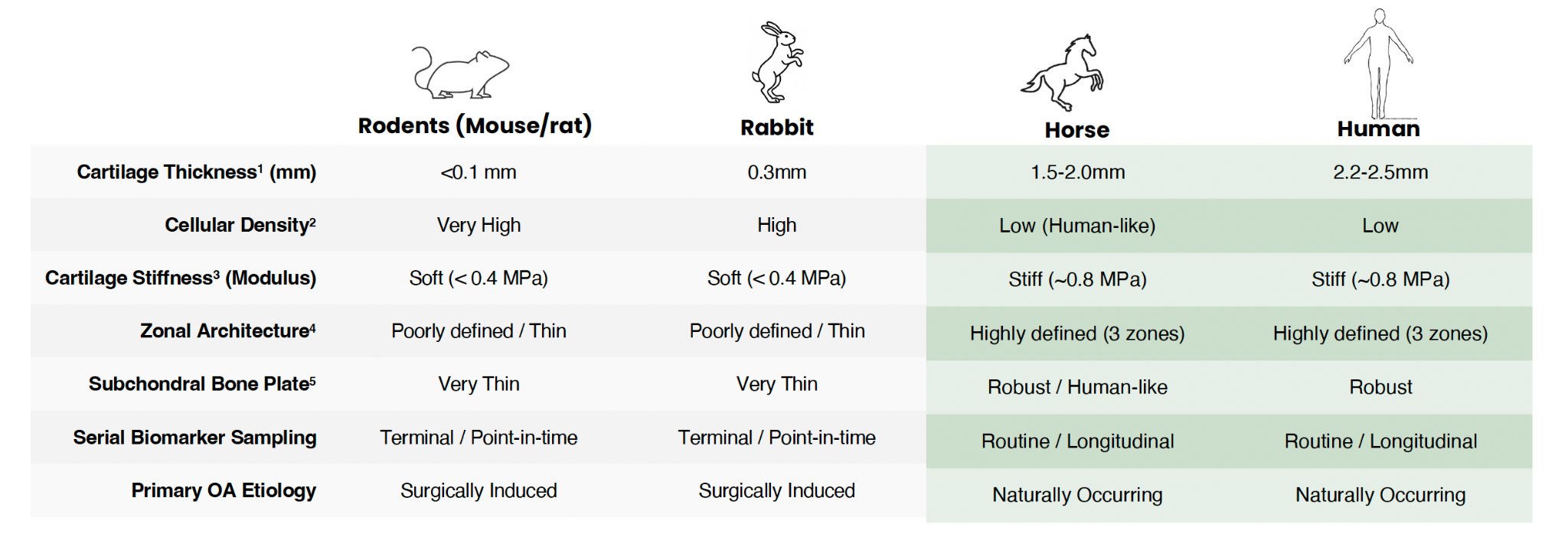
Shared disease etiology is necessary, but not sufficient. A useful model system needs to also resemble human OA at the cellular and anatomical levels. Naturally occurring OA in horses develops through years of joint loading, much like human OA and unlike surgically induced disease in mice. As a result, horses and humans show significant similarities on the cellular level, such as corresponding disease-associated populations of chondrocytes in the cartilage and fibroblasts in the synovium (we’ve presented this at a few conferences). Horses also have large joints with thick cartilage and an anatomy that permits much more direct sampling than a mouse joint.
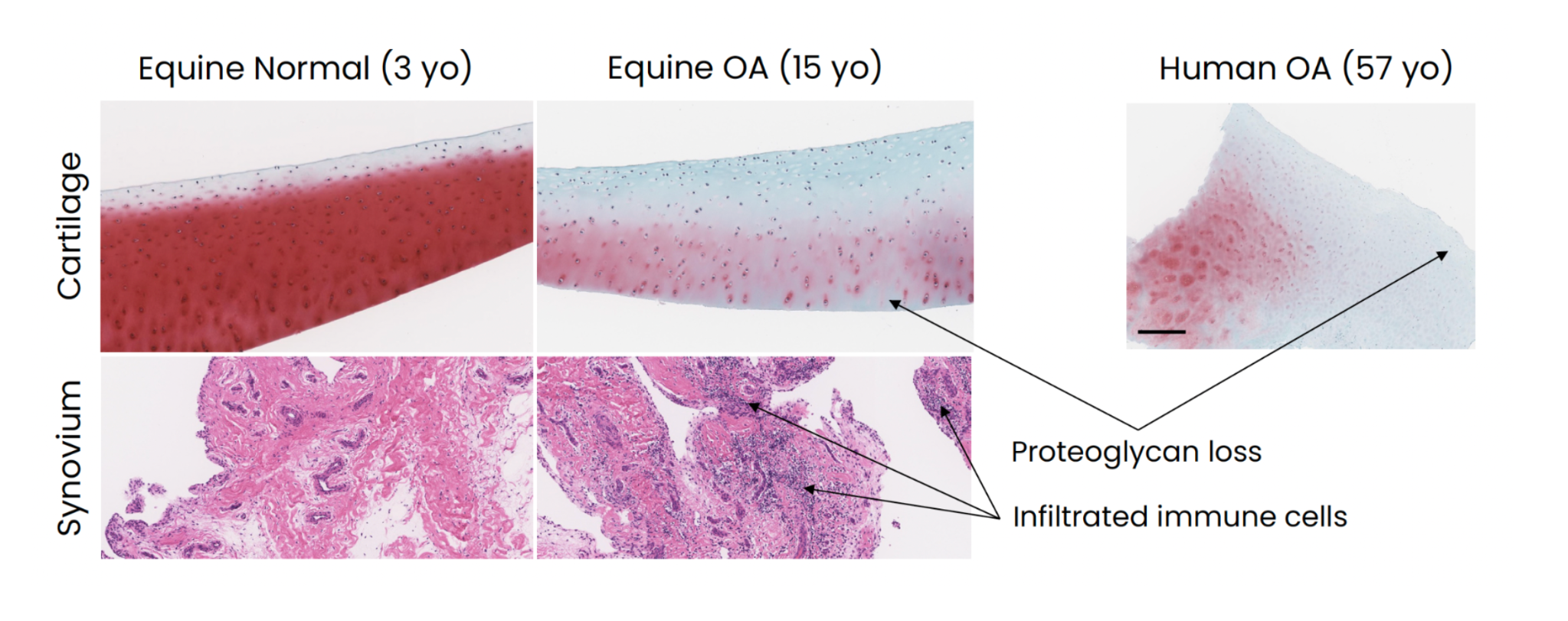
The trade-off of using natural disease models with high predictive validity is experimental inconvenience, and greater heterogeneity across individuals (just like in human patients). Fortunately, Mosaic Screening cancels both of those: because it requires only a few horses, the increase in predictive validity quickly becomes worth this effort. And heterogeneity across individuals doesn’t matter when your control treatments are in the same animal as your candidates.
So we made a simple decision: use mosaic screening in this high-fidelity system until we found the right target. We no longer had to trade biological fidelity for screen scale.
Your destination might be closed when you arrive
The next question was what to put into the screen. Of course, biological evidence and human genetics can point us towards more likely targets, but we also had to consider whether a biological target could produce a drug.
Every time we enter a new indication, we first define the drug profile that would satisfy medical needs and market considerations. We can then choose to screen only targets that fit this profile. For OA, AAV gene therapy is an ideal modality for achieving local and lasting effects in the joint while avoiding systemic side effects. So we chose to screen therapeutic proto-assets directly: AAVs carrying constructs that already resembled clinical gene therapies, rather than targets that would need to be converted into drugs later.
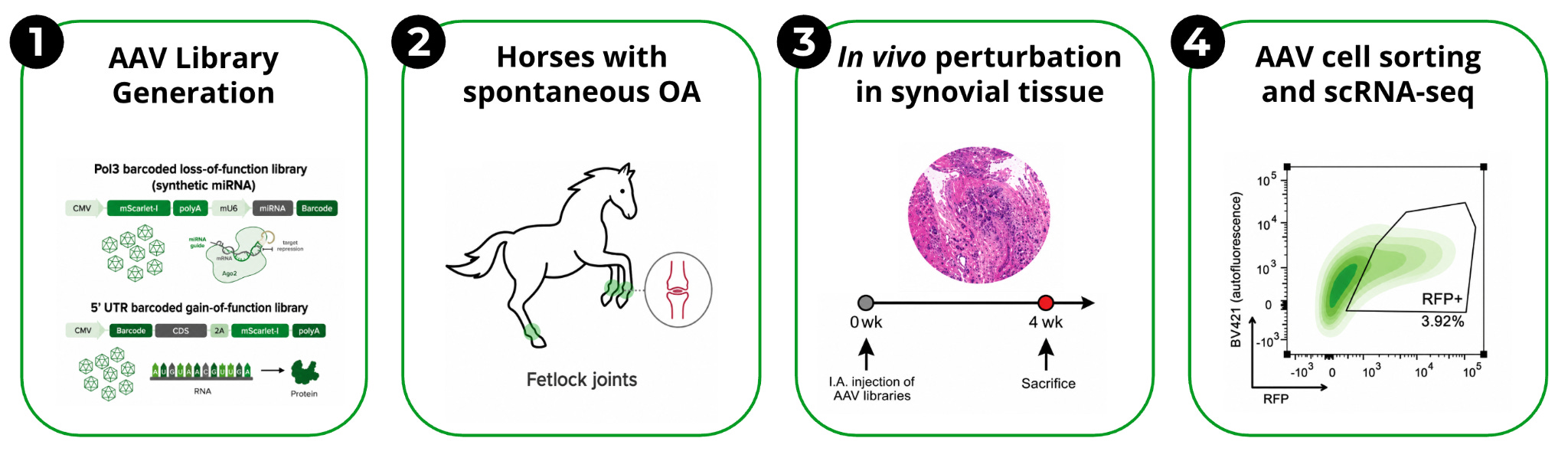
Across a few rounds of screening, we tested an AAV gene therapy library containing 197 barcoded perturbations, including combinations. Each AAV contained a sequence designed to up- or down-regulate a candidate therapeutic target, along with a nucleotide barcode. We injected the library at a sub-saturating dose that kept the effects of individual perturbations distinguishable and the tissue environment unchanged (verified by sequencing non-transduced cells).
The result is a mosaic tissue, with a few AAV-transduced cells scattered among unperturbed, diseased tissue. The animal has effectively become a screening plate.
All together now
When we started Gordian, predicting physiology from single-cell transcriptomics was not a mature science (alas, it still isn’t). We had to develop ways to tie measured cell states to the physiological processes involved in disease. The story of how we build these therapeutic keys will be told elsewhere, but one important consideration was anchoring to human patient data to filter out animal-specific effects early.
We evaluated each perturbation using curated “molecular features”: groups of genes representing disease-relevant processes like cartilage degradation, inflammatory signaling, and oxidative stress (more detail in our recent preprint). For the first time, this gave us shared disease-relevant axes on which every perturbation could be ranked.
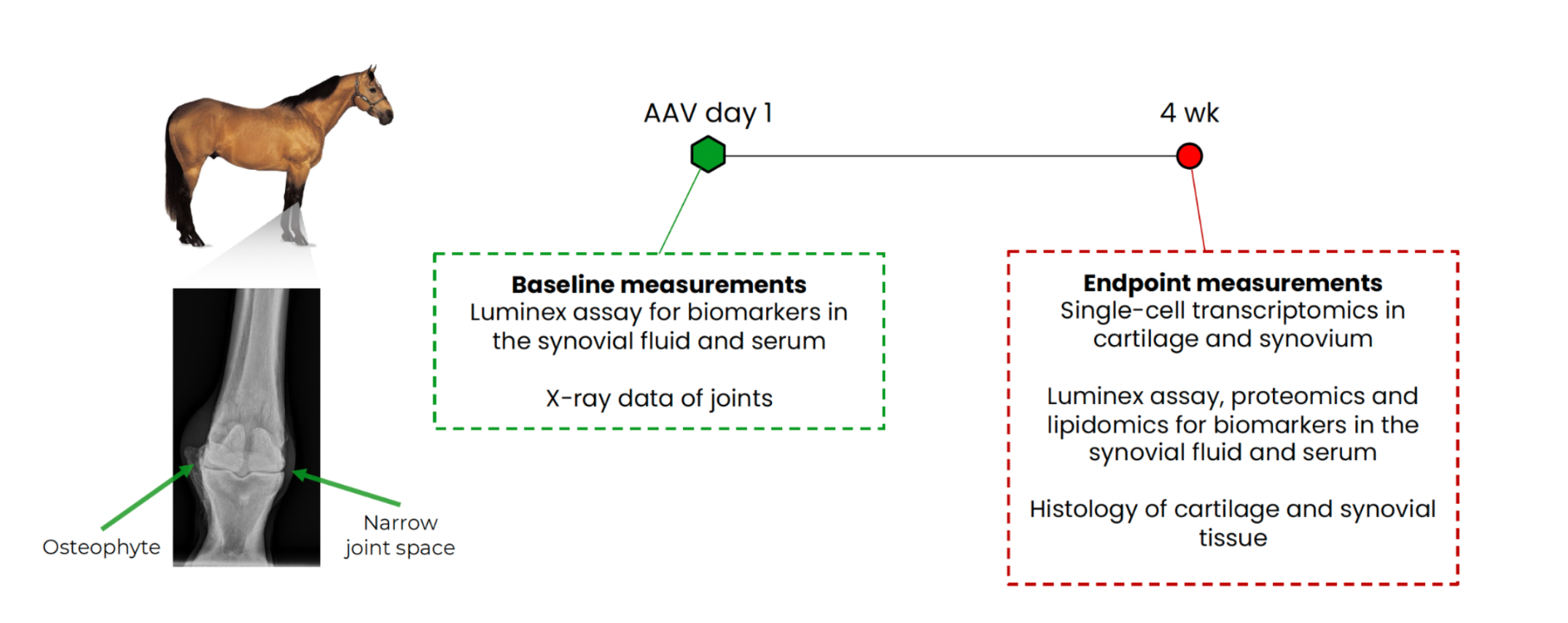
We ran the mosaic screen over one month, to ensure that we weren’t fooled by immediate effects but rather could compare the steady state patients would experience.
After four weeks, we extracted the cells, did single-cell RNA sequencing to resolve each one’s effects on the transcriptome, and nominated hits based on our physiology-informed transcriptomic features. Mapping the effects of every target in a high-fidelity model gave us a map on which every target could be compared against every alternative. This allowed us to compare the perturbed cells with control cells from the same animal and ask a relatively simple question: did the perturbation move its transcriptome towards a state that is associated with OA improvement? If it did, that is good. If it moved them in the opposite direction, that is also useful to know, although somewhat less exciting for everyone involved.
A simple way of looking at the data is as a matrix. Every column is a different perturbation, and every row is a different aspect of disease that is represented by a molecular signature. For each signature, we had already decided whether it should increase or decrease. This helped us rank perturbations by how strongly and consistently they moved multiple disease signatures in the desired direction:
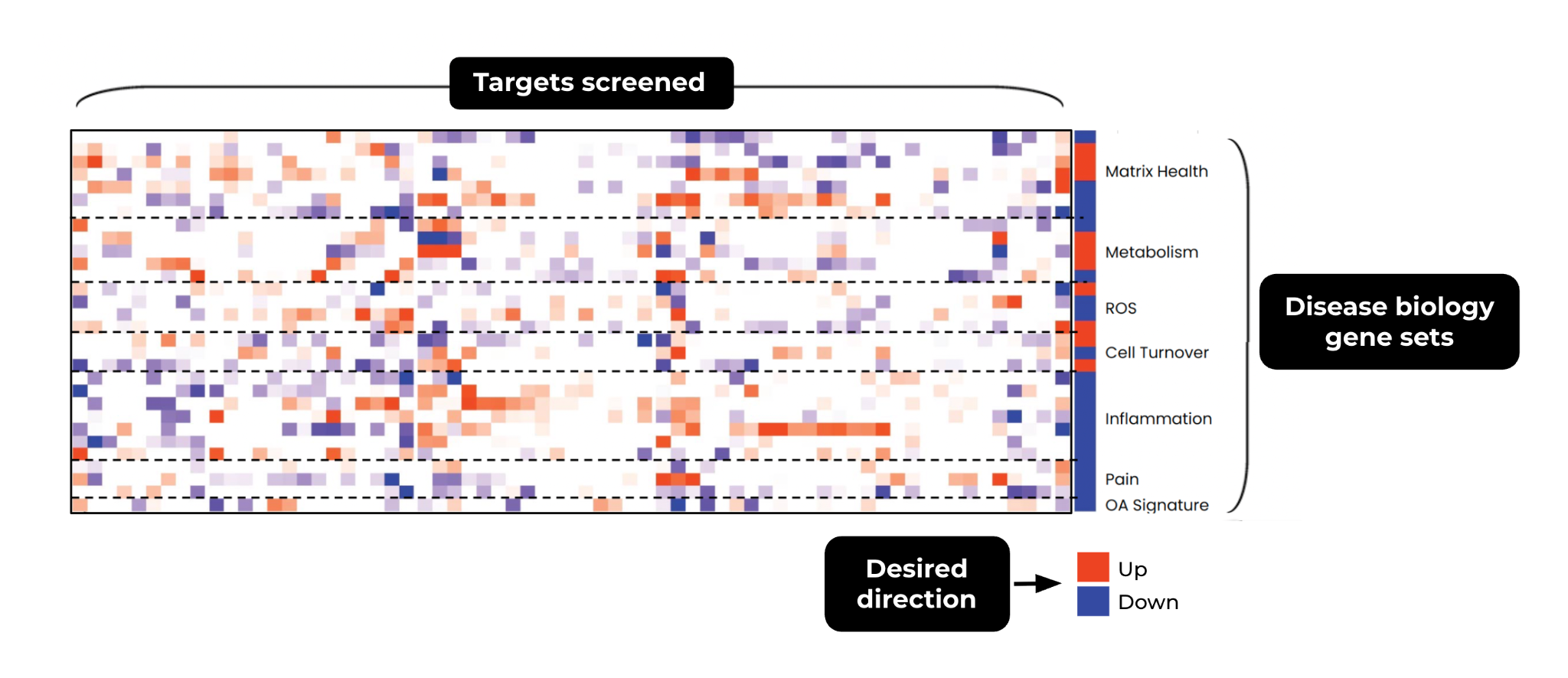
Our causal validation pipeline narrowed the initial 197 targets to 32 candidates, which were next taken for confirmation in human tissue ex vivo.
Trust but verify?
Even though the screen was scored using molecular features of human OA, we still wanted to confirm that the effects were true across tissues from different patients.
Because we don’t have better therapeutic options, hundreds of thousands of US patients get knee replacement surgery each year. We got access to the tissues of the replaced knees, which let us test the candidates directly in patient tissue. We co-cultured cells and/or whole pieces of tissue, both the cartilage and the synovial joint lining, to preserve cross-talk relevant to disease.
Across eight donors, we collected lysates after five days (cells)/ three weeks (explants) and measured the amount of cartilage proteins (GAG) produced, as well as the protein levels of two major cartilage degrading enzymes: MMP12 and MMP13.
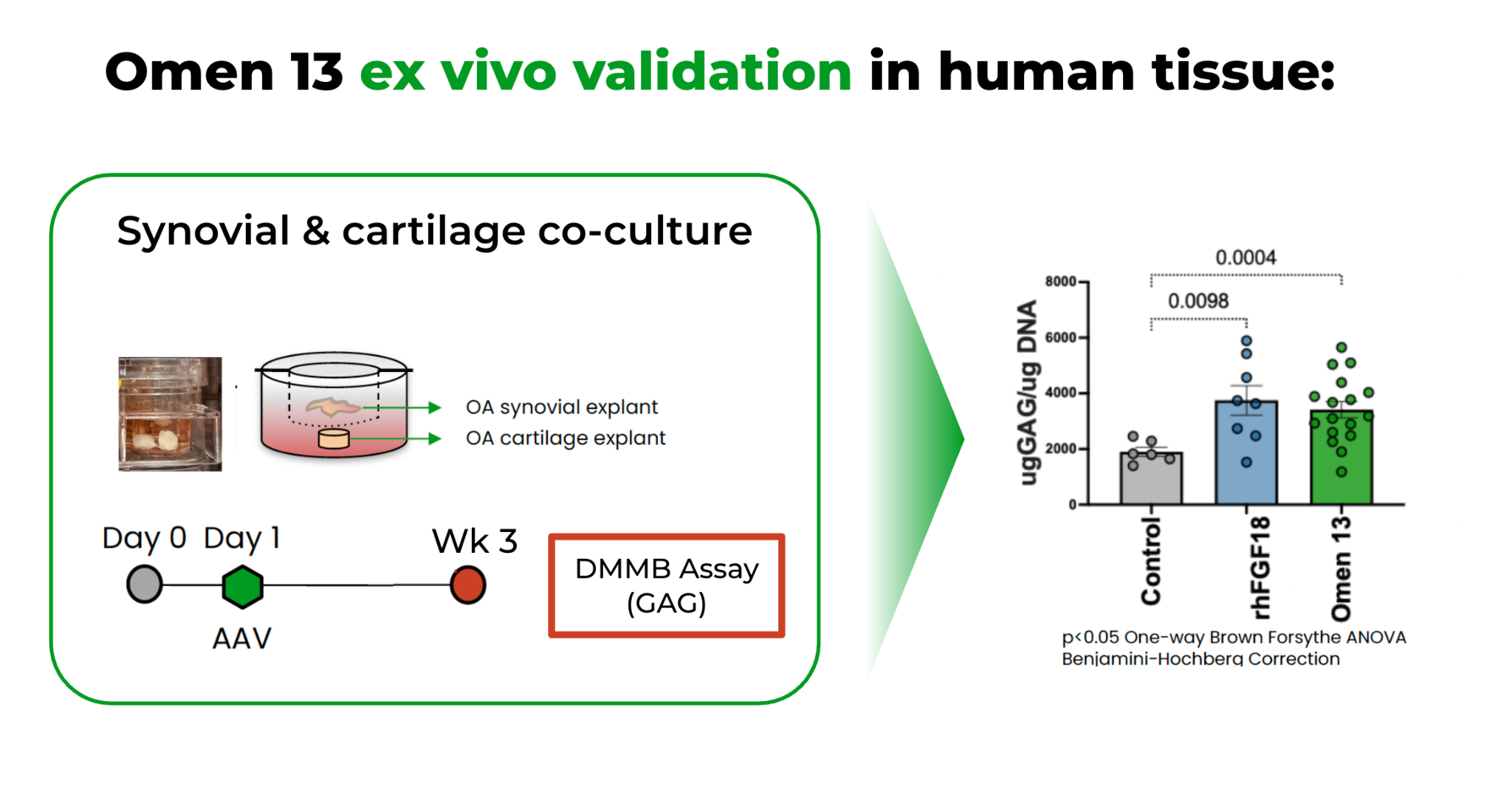
Of the 32 nominated targets, 13 showed sufficient cartilage protection to be promising disease-modifying candidates, toward making more extracellular matrix and breaking down less of what was already there. The top targets were then tested for anti-inflammatory effects on human synovium as well.
More than a feeling
OA involves cartilage degeneration, but it also causes pain. And frankly, patients care a lot about the pain. Because pain can’t be measured in human tissue explants, we expanded into an in vivo model designed to quantify it.
The standard pain model is called MIA, which uses a monoiodoacetate injection to injure the joint. Pain is then measured with a static weight-bearing assay which looks at whether the rodents shift weight away from the affected leg.
The positive control is a high-dose of two pain drugs: celecoxib and pregabalin. Both are used to manage OA pain in humans, making the combination a useful positive control in this experiment.
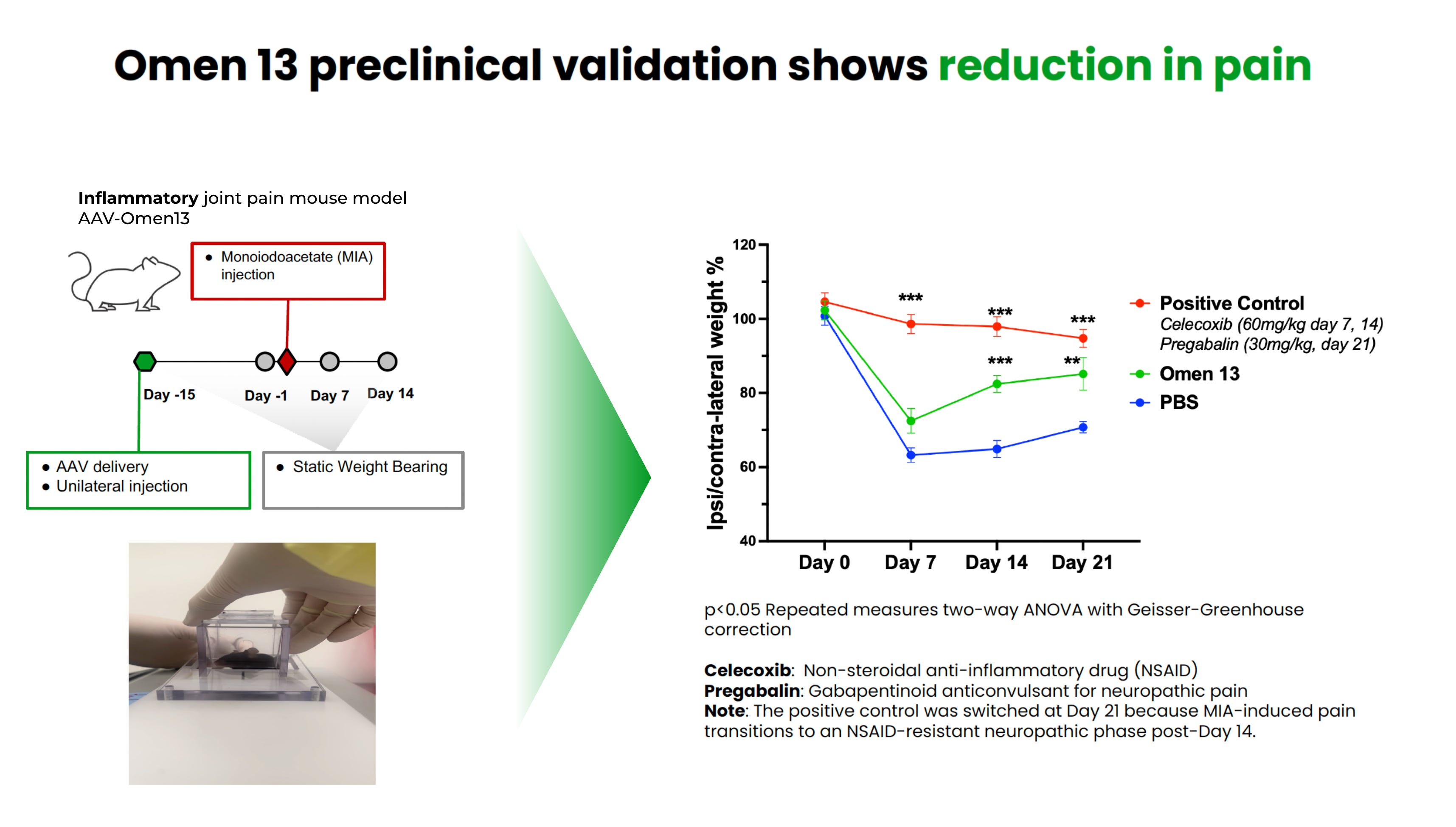
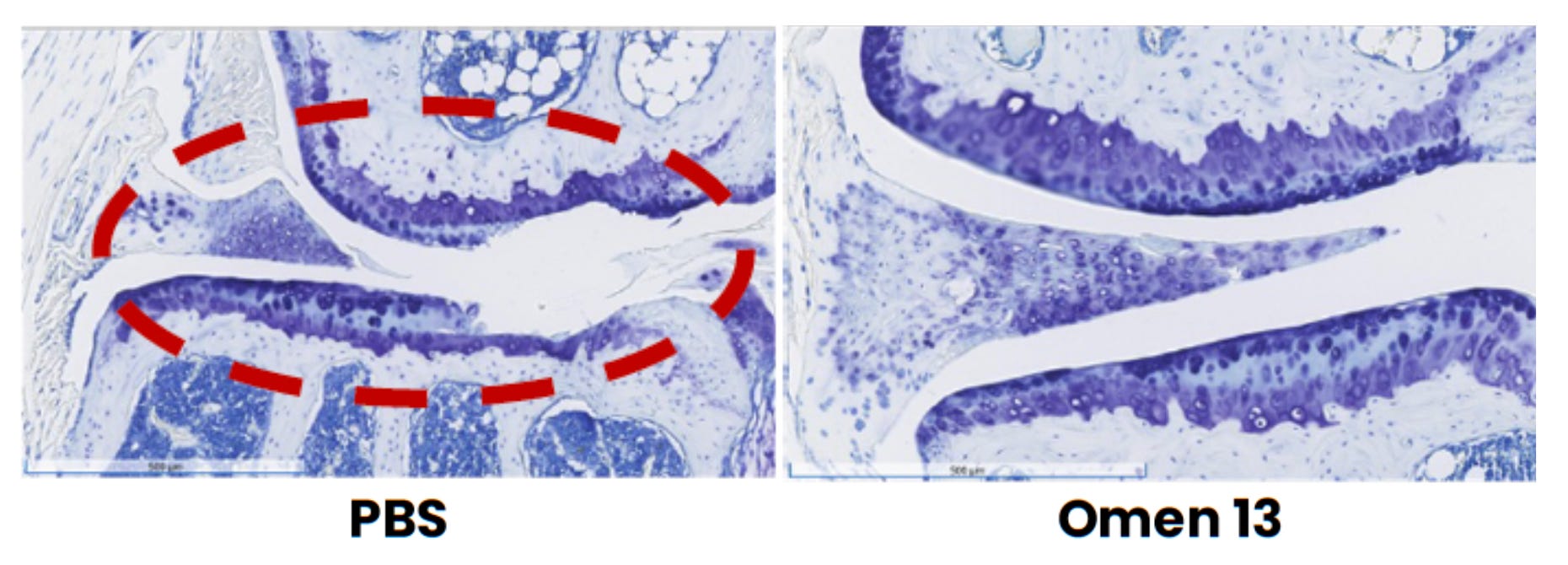
Omen 13 almost completely reduced the weight preference once expression begins, and the effect persisted through the three-week time point. As we mentioned earlier, the current standard of care for OA focuses on numbing the pain. This is desirable, but without disease modification, it only makes the path to joint failure and replacement less painful.
Heterogeneity is the spice of life
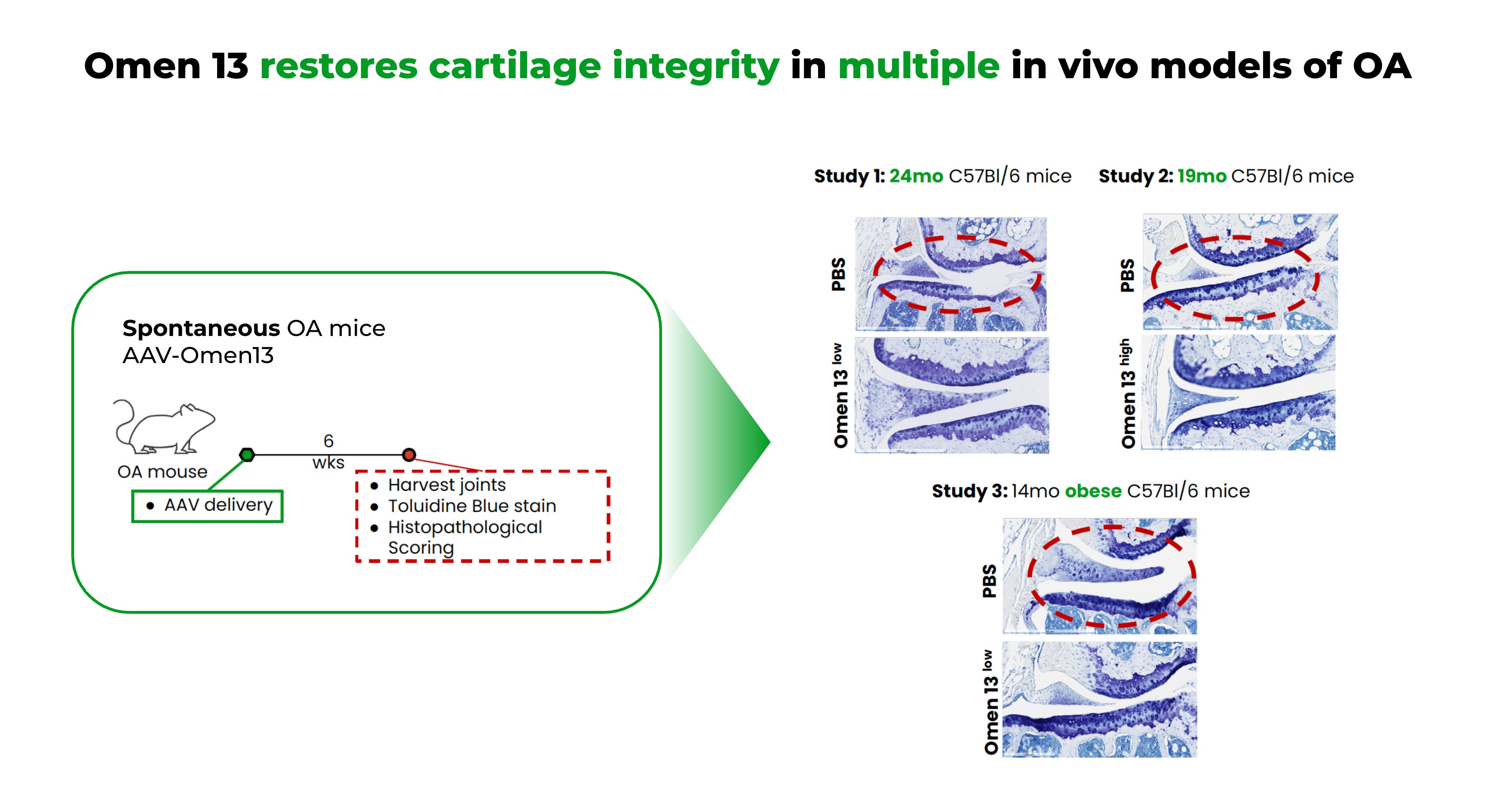
But pain relief was only half of what we wanted. We also needed to know whether Omen 13 could modify the disease itself, and whether that effect would persist across different biological contexts. We had already screened in a large mammal and validated in human tissue, so mice gave us a scalable way to test the effect of age and metabolism (relevant risk factors for OA), and build an efficacy profile for each candidate. We intentionally test in animals with progressive age-related OA and high inter-animal heterogeneity, rather than surgical OA induction, to better mimic patients.
We ran three studies in these mice: the first two used naturally aged animals, 19 or 24 months old, that had developed OA naturally. The third was done in obese mice, which also develop OA but faster, likely due to a mix of inflammatory and weight-bearing effects.
In all three, a single intra-articular injection of Omen 13 significantly reduced cartilage erosion and restored proteoglycan content, confirming that its mechanism remains effective and identifying patients with obesity as a potential expansion population.
Better than the Beatles?
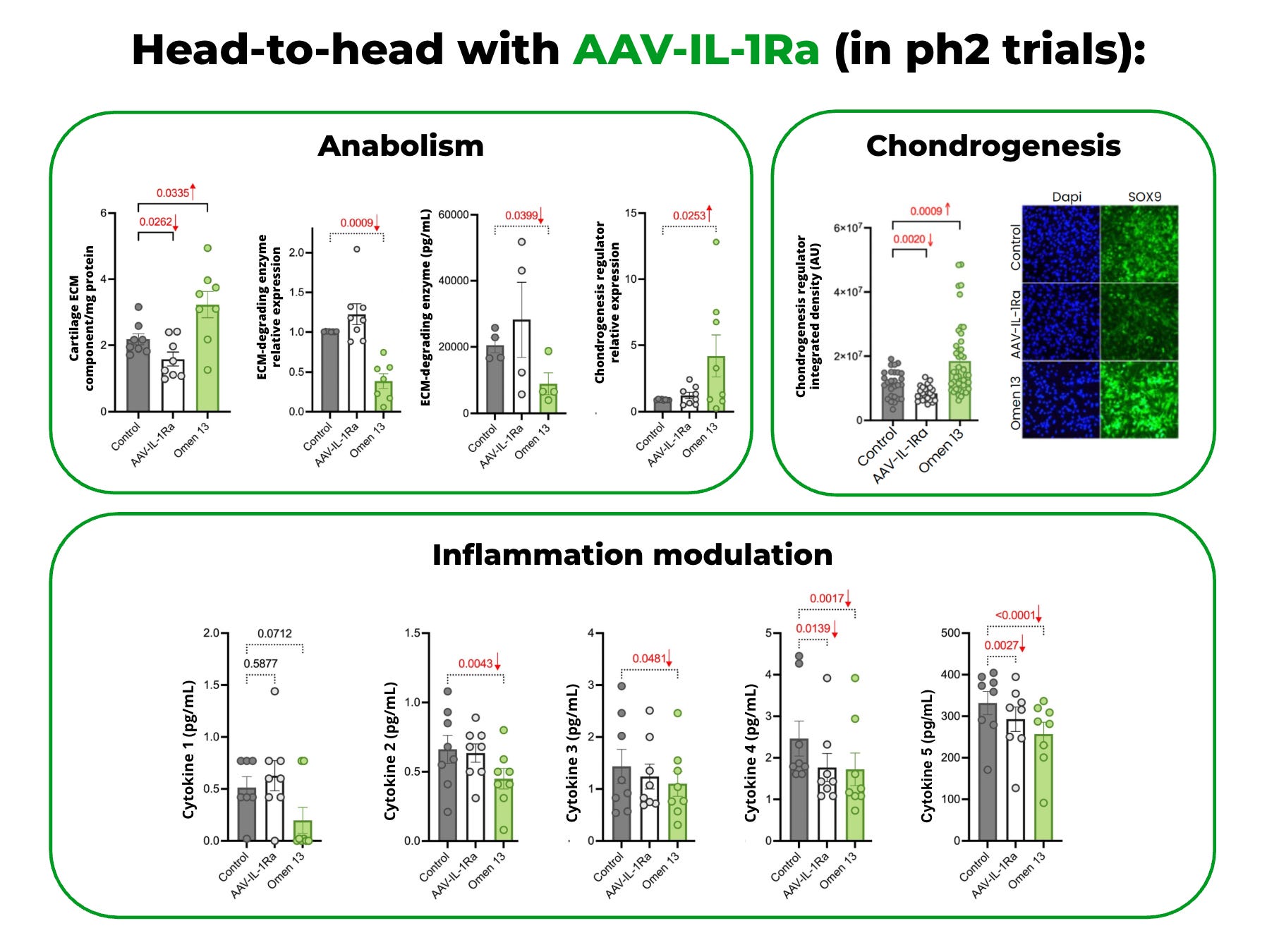
Omen 13 looks very promising so far, but is it better than other drugs in the OA clinical pipeline? Clinical-stage comparators were included throughout screening and selection, including rhFGF18 (sprifermin) and Genascence’s AAV-IL-1Rα.
We had already seen that Omen 13 is differentiated from rhFGF18 in the screen where all 197 targets were benchmarked against it. But before advancing a candidate toward the clinic, we wanted to remove another layer of risk by comparing it directly with clinical-stage drugs.
Compared with both FGF18 and a new comparator, AAV-IL-1Ra, Omen 13 remained differentiated enough to encourage further development. It suppressed inflammation at least as well as AAV-IL-1Ra, while showing anabolic cartilage effects, and boosting SOX9, a central regulator of cartilage and chondrocyte formation.
Start Me Up
We went on a quest to find an OA drug that treats both degeneration and pain. We scrutinized hundreds of candidates in various human and rodent models on our way there, ex vivo and in vivo. Many showed promise pre-clinically, testament to the candidate abundance that we were able to create by scaling up causal validation with Mosaic Screening. But only one combined the particular profile we were looking for: anti-inflammatory, anti-catabolic, and supporting local therapy. That was Omen 13. It acted through multiple mechanisms, worked consistently across different human donors, and showed broader effects in head-to-head testing than a purely anti-inflammatory clinical-pipeline comparator.
We’ve had our INTERACT meeting with the FDA, which aligned us on a streamlined path to IND. Omen 13 is now in IND-enabling studies to support entry into clinical trials as a gene therapy…

> The story of how we build these therapeutic keys will be told elsewhere
I read this as “will be told _everywhere_” and thought… yeah! Mosaic screening for gene therapies seems like such a breakthrough idea that I’m surprised I haven’t heard about it outside of Gordion/Norn.